HANDED OFF 2022CaptureLive AI
SKILLSTOOLSProduct Strategy
TIMELINEROLEMay – June 2022
UX/UI Designer
User Research
Market Research
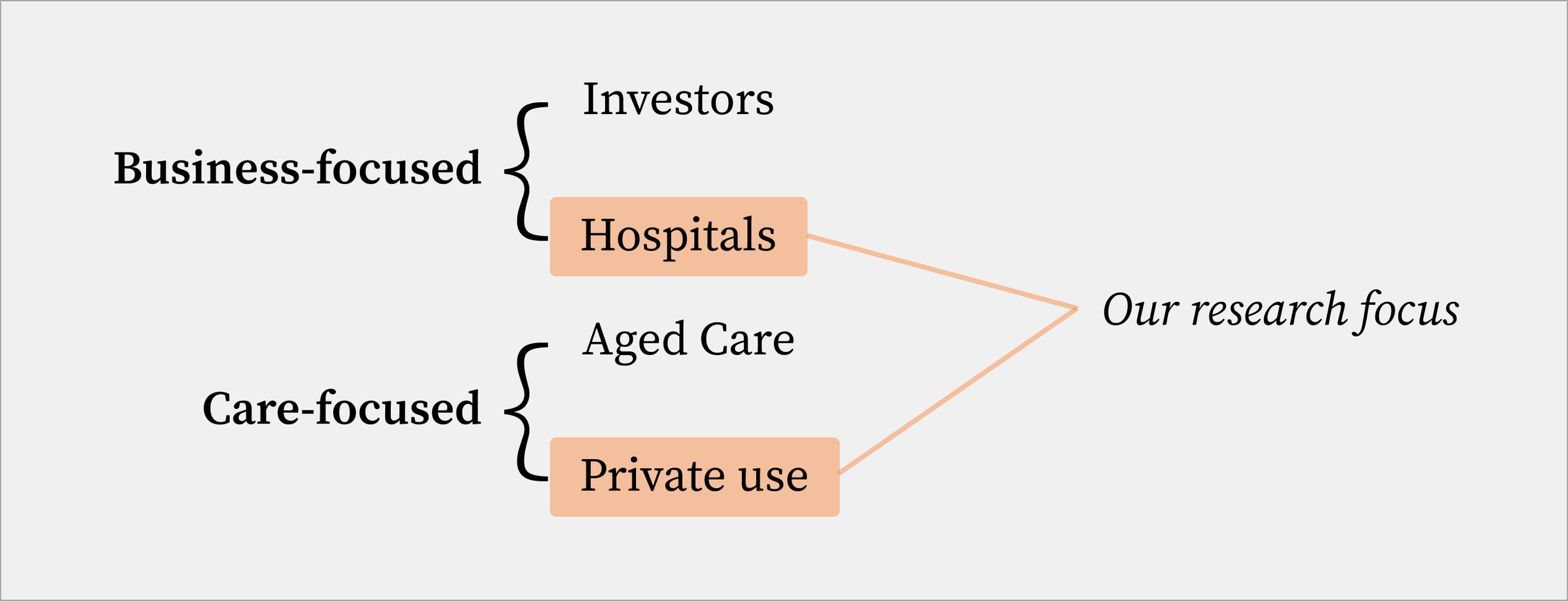
As part of a collaborative UX research team, we explored how CaptureLive AI’s fall detection technology could be positioned for adoption across clinical and private care settings. We researched the needs, behaviours, and expectations of key stakeholders, including healthcare management, nurses, and doctors, to understand how they perceived the technology and what would make it valuable in practice.
Understanding what drives trust and adoption in fall detection technology.
OVERVIEWPROBLEMCaptureLive AI lacked insight into how its fall detection technology would be perceived and adopted across clinical and private care settings. Without understanding the needs and concerns of healthcare decision-makers, care staff, and private users, the team risked overlooking key barriers to adoption and opportunities to communicate the product's value effectively.
Uncovering barriers to adoption.
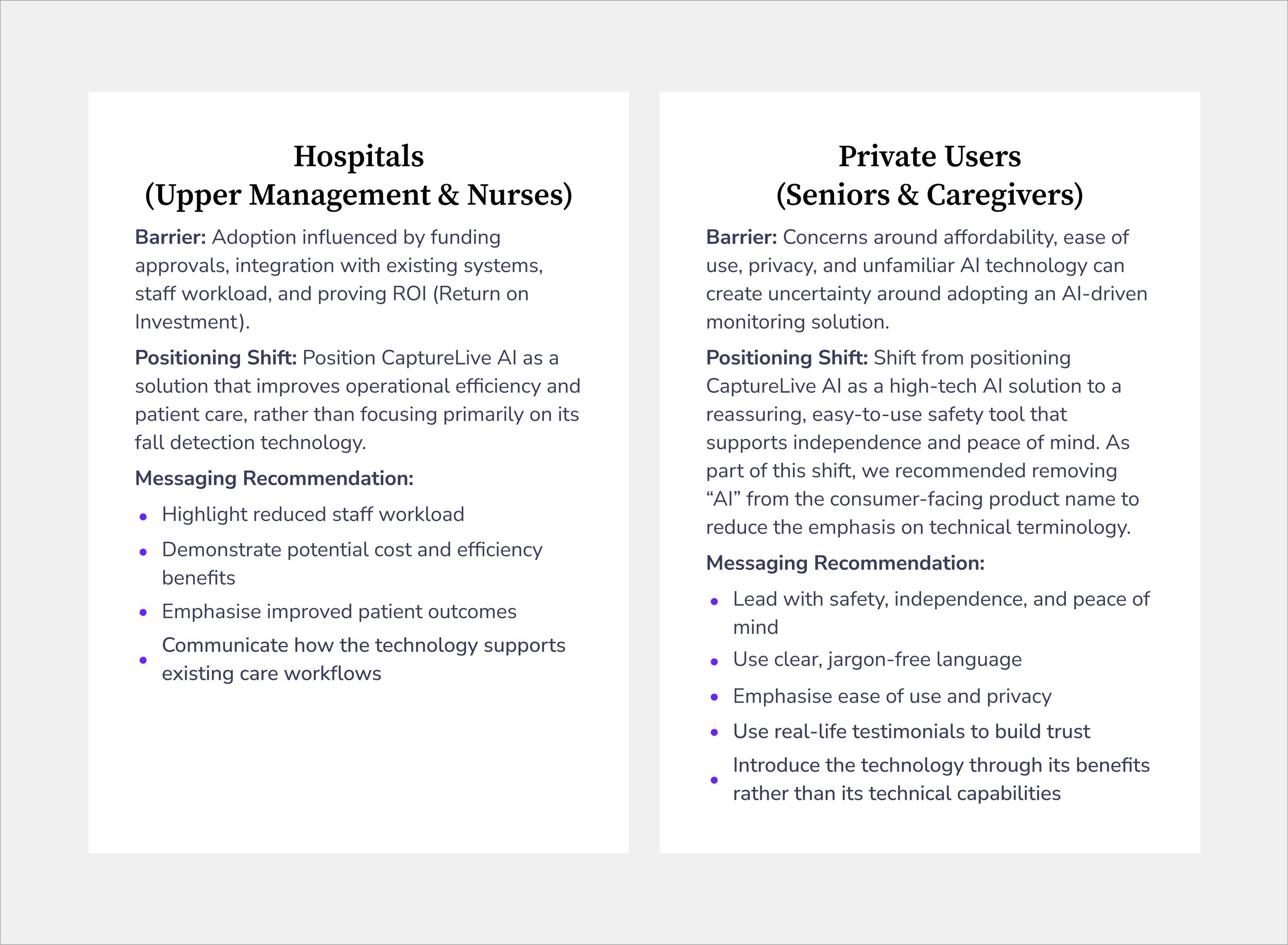
SOLUTIONOur research showed that adoption depended not only on the functionality of CaptureLive AI, but on how the technology was communicated to different audiences. We developed positioning recommendations for two key markets: hospitals and private users.
Positioning technology around people.
RESEARCHTo understand what could drive or prevent adoption of CaptureLive AI, we explored how different stakeholders perceived fall detection technology, from the people responsible for implementing it to those providing hands-on care. Through interviews and surveys, we examined their expectations, concerns, and behaviours to identify opportunities for CaptureLive AI to communicate its value more effectively.
Understanding what stands between the technology and its users.
KEY INSIGHTSSimplifying complex technology

Across both group, complex or unfamiliar language created confusion and discouraged engagement, while simpler, more familiar language made the technology easier to understand and discuss.
Affordability could influence adoption

Staff valued tools such as Power BI as they provided a centralised view of client information. Having key information available at a glance improved efficiency and confidence when supporting clients.
Humanising technology builds trust

Interviews with nurses highlighted the need to humanise this technology to foster better connections with patients and enhance their understanding of its benefits.
We analysed existing fall detection solutions to see how competitors approached safety, monitoring, privacy, and independence. This helped us identify how different products positioned their technology and where opportunities existed for CaptureLive AI to differentiate itself.
Care staff also expressed concerns about technology feeling overly medical or intrusive:
Exploring the current fall-detection market.

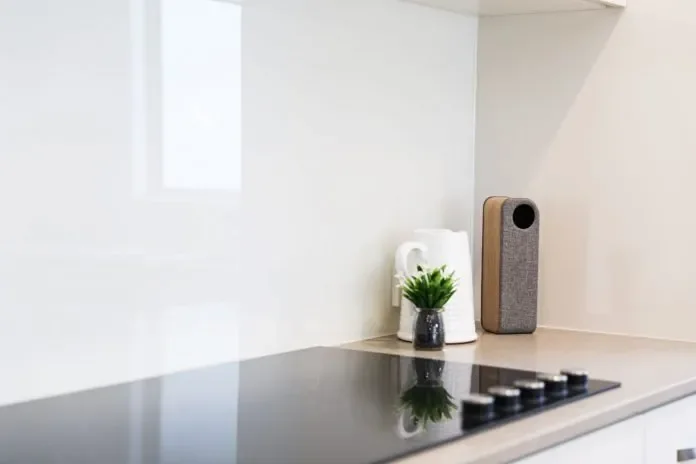
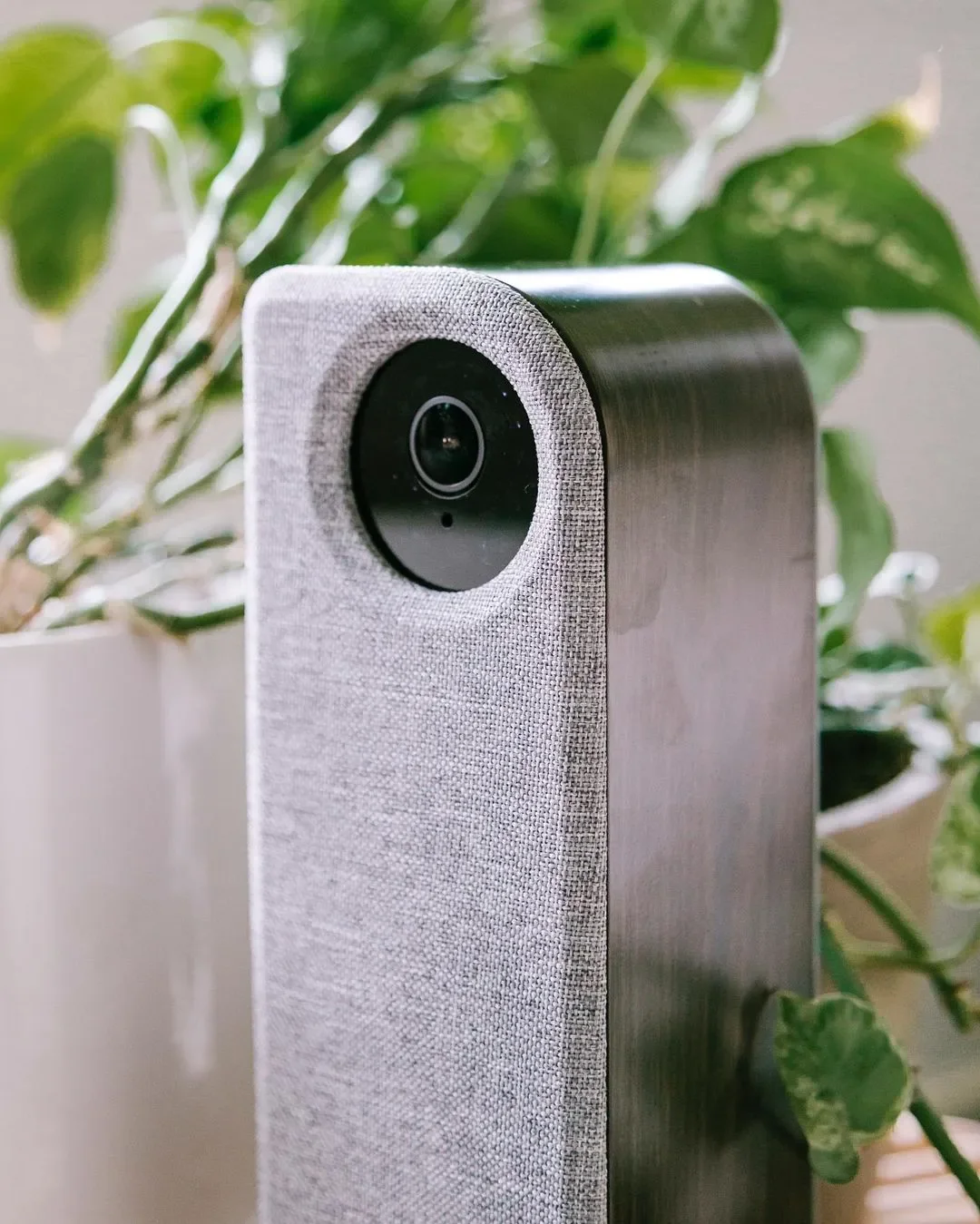
Care staff also emphasised that a non-medical appearance could help patients feel more at ease. The product’s design is crucial for marketing, as a more approachable look fosters comfort and reduces the feeling of being watched. Our competitor analysis showed that products like Home Guardian succeed by blending advanced technology with familiar, friendly designs. Their product is viewed as a helpful tool rather than a surveillance device, due to its sleek, modern design that fits seamlessly into the home.
RESEARCH SYNTHESISOur research revealed that successful adoption would depend on more than the technology's ability to detect falls. Users needed to understand the product easily, feel comfortable with its presence, and trust that it supported safety without feeling invasive. I synthesised these findings into a persona and empathy map to better understand the motivations, concerns, and expectations behind adoption and translate them into clear design priorities.
Translating user needs.
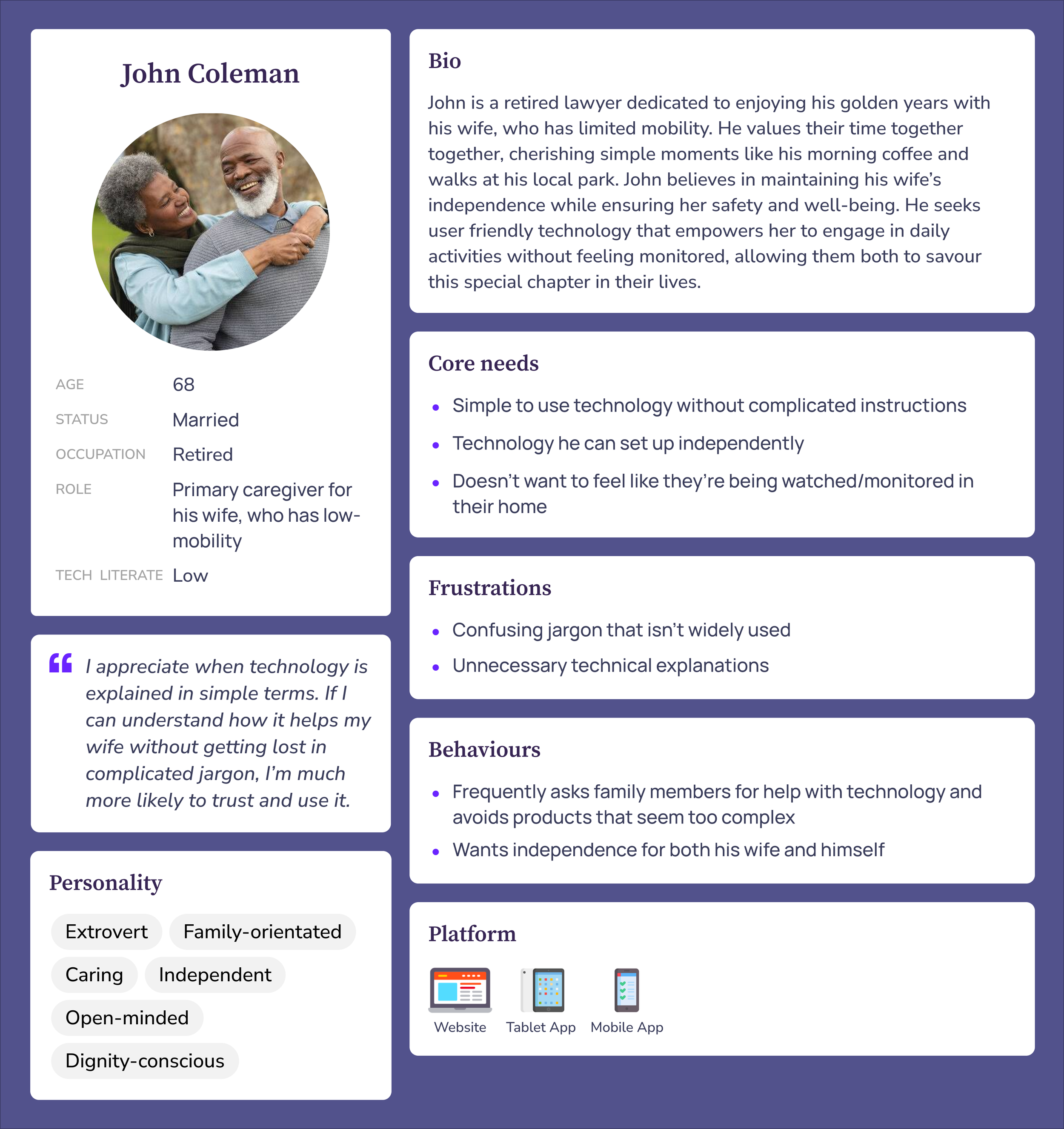
John values safety, simplicity, and independence, and wants technology that supports his wife without making her feel like her dignity is being compromised. By using a persona, we identified that simplifying language across the board is essential for better user engagement and product adoption. This insight influenced our design team's choices to prioritise clear, jargon-free communication.
Meet John, the primary caregiver for his wife, who has limited mobility.
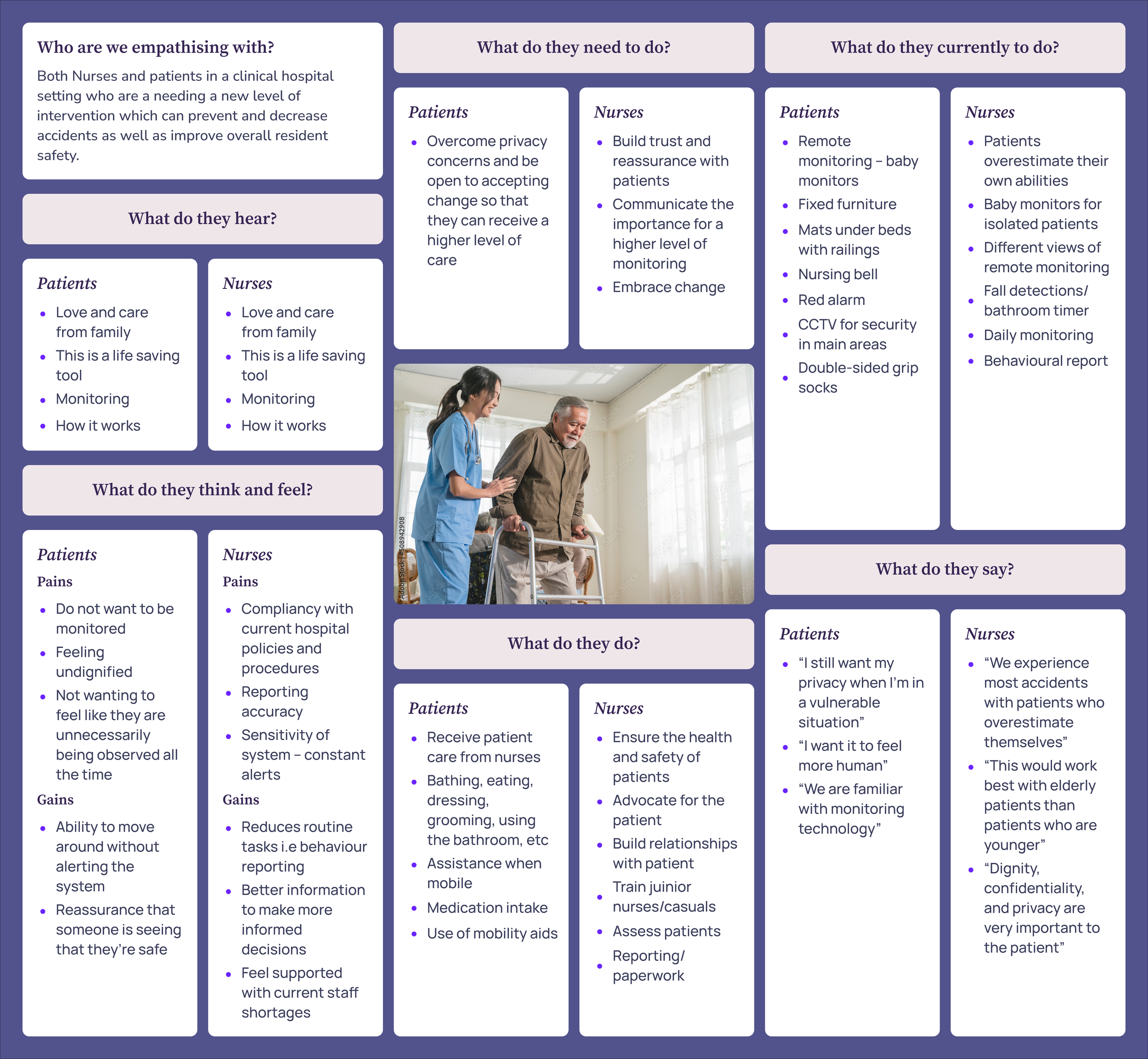
The empathy map revealed key emotions around trust, comfort, and ease of use. Nurses particularly emphasised the importance of technology feeling supportive rather than invasive, reinforcing the need for a visual language and tone that felt approachable and human.
Building trust through a supportive experience.
REFLECTIONThis project was very different from my previous case studies, as my role focused primarily on user research with elements of UX strategy rather than designing the final product. One of the biggest challenges was sourcing appropriate users to conduct surveys and interviews with. We weren't provided with a defined list of users, so we had to recruit our own. My experience working in a hospital gave me access to healthcare professionals who could speak directly to the realities of managing patients at risk of falling, which became particularly valuable in grounding our research in real-world practice.
Speaking with nurses was one of the most insightful parts of the project. Rather than waiting for technology to solve the problem, they had already developed their own low-cost workaround using baby monitors to keep an eye (or ear, in this case) on patients who were “fall risks”. Their solution demonstrated how frontline staff adapt to constraints such as staffing pressures like nurse-to-patient ratios, and limited funding within the public healthcare system. It reminded me that effective solutions don't always need to be technologically sophisticated, but they need to work within the realities of the people using them.
I was also surprised by how closely the concerns of healthcare professionals echoed those of private users. Although these groups operated in very different environments, both ultimately wanted the same thing: greater safety and reassurance without creating unnecessary pressure, complexity, or a feeling of being watched. This reinforced the importance of looking beyond demographic or professional differences to identify the underlying needs shared across user groups.
The project taught me to look beyond the technology itself and question whether a proposed solution genuinely fits into people's existing behaviours, environments, and constraints. As a researcher, I learned that some of the most valuable insights can come from understanding the workarounds people have already created for themselves.